13Sick Part 2 – What It’s Like Working Online With13Sick as a GP Registrar
Seeing Patients Sitting Down With a Cup of Tea
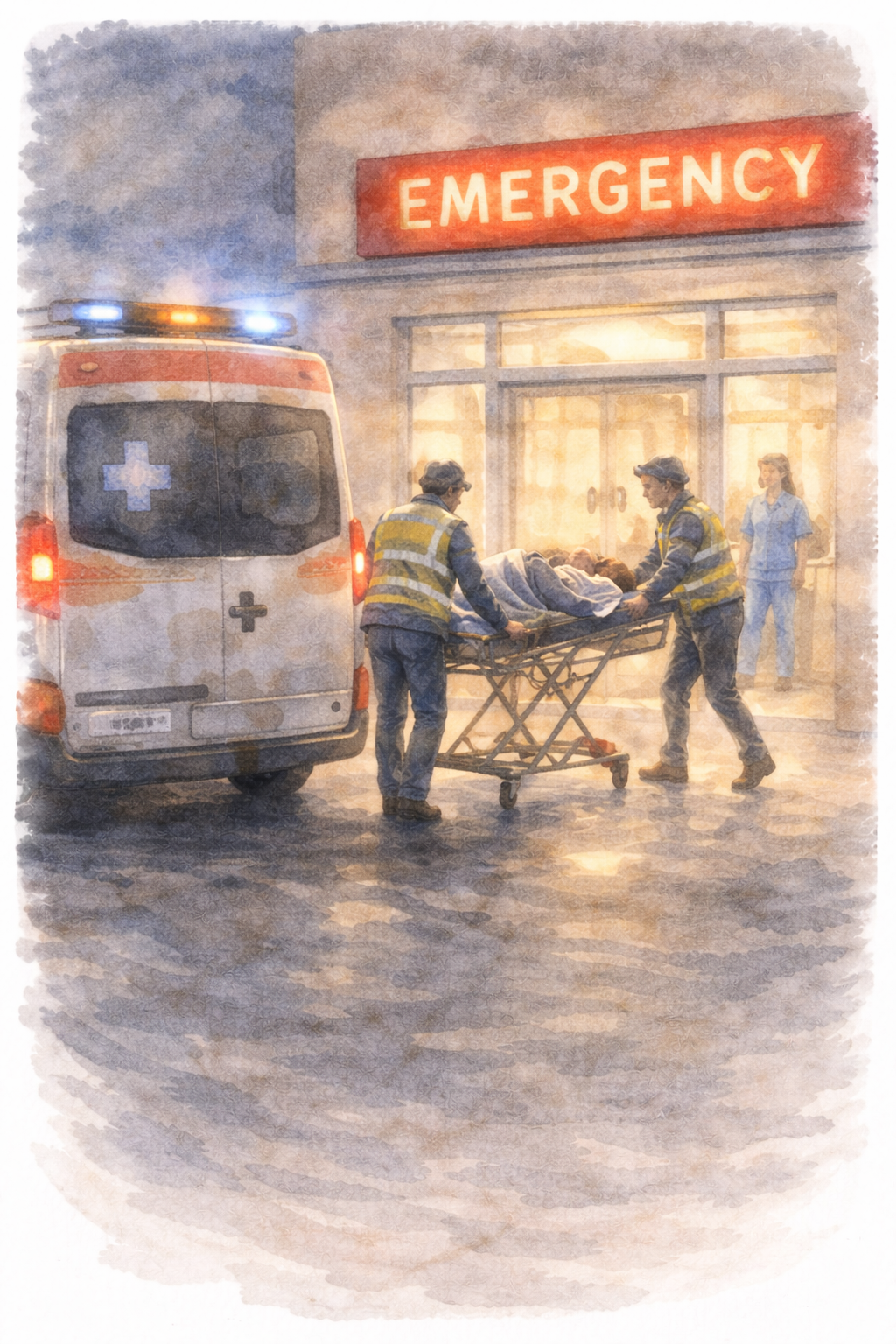
Before I started working at 13Sick, I spent time as the GP Registrar on call for a 24-hour urgent care centre. When a patient presented late at night, I would receive a phone call waking me up and asking me to come in. Often it was 11 p.m - for a patient who has decided they cannot get to sleep with their symptoms - and sometimes 2 a.m. - for a patient who has been woken from sleep. The patients were usually frightened. Abdominal pain. Headaches. Back pain. That vague but deeply unsettling feeling of “something isn’t right”, and a fear that if they left the symptoms simmering then they would pay for it later.
From my perspective, I was trying to attend to them whilst also trying to get enough sleep to function safely the next day. There was an inherent clash. They were anxious and exhausted; I was being dragged out of bed, half-awake, and expected to make clear-headed decisions. I went in dutifully, and I always took the patients’ presentations seriously, but over time I noticed a pattern: a large proportion of these late-night presentations could have been managed safely without the patient ever leaving their bed.
That realisation sat with me. When I started doing telehealth online with 13Sick, the contrast was immediate. Instead of being jolted awake, I would be sitting at my desk at home with a cup of tea. Rather than being called, I pooled responsibility with my colleagues and only a few doctors needed to be online at any given time.
When I was online and seeing patients, In the majority of cases, I could take a proper history, assess risk, manage symptoms, write prescriptions and referrals, and safely direct them to stay at home and go to sleep. Patients would often tell me that they thought if they were not able to speak to me, they would already be in the Emergency Department.
At other times, I would be urging the patient to get themselves to ED or Urgent Care, and not to delay!
Why I Went Looking for Something Better
I didn’t arrive at 13Sick by chance. Before this, I had worked for other telehealth services, and while I appreciated the flexibility, I was increasingly uncomfortable with how the work was structured. Consults felt rushed. Volume felt relentless. Communication with dispatchers or supervisors was often delayed or fragmented. If I needed to discuss a case, the senior doctor I needed might not be available in real time.
Over time, I worried that the system itself was pushing doctors toward speed rather than thoughtfulness, particularly late at night when both doctors and patients are more vulnerable to fatigue. Telehealth can be done very well, but it can also be done poorly if the incentives and structures are wrong. I found myself actively looking for a model that prioritised safety, quality, and clinical judgement.
Interestingly, I found 13Sick by asking Perplexity AI to help me identify better telehealth roles. I was searching for something that felt professionally defensible, and where the pay was equal to the risk of the work. The AI was firm that 13Sick was what I was looking for. When I looked into it myself, the model made sense to me. I applied, and because I was on the RACGP training program, I was eligible to work for 13Sick as an Approved Medical Deputising Services (AMDS) program.
Onboarding and First Impressions
The onboarding process at 13Sick was rapid and refreshingly straightforward. I completed a software tutorial and then essentially began working straight away. There was no prolonged period of uncertainty, no sense of being left to figure things out alone. I had a dispatcher whom I could chat to live, right there in the electronic medical record window, and I had a senior doctor whom I could contact at any time.
What struck me immediately was the quality of the software. Without exaggeration, it was the most functional and elegant medical record system I had ever used. Everything felt intuitive. The layout made sense. Important information was easy to find. Clinical workflows didn’t feel like they were fighting against you while you were trying to think.
I also noticed very quickly that the system was designed to support good medicine. Guidelines were readily available. Links to eTG were built in. Prior notes were easy to review, and where prior documentation was lengthy, an automated summary was provided. Even features like an integrated AI scribe were implemented thoughtfully. Instead of feeling like technology was something I had to wrestle with, it felt like it was quietly supporting the work I was already doing.
The Rhythm of a Typical Shift
A typical shift at 13Sick is busy, with steady consecutive consults, particularly during peak after-hours periods. But the work has a rhythm that feels sustainable. The best way to practise is to get into a “flow” state, and once that happens, the time passes quickly. One patient finishes, the next appears in the queue, and the work feels continuous rather than chaotic. Seeing at least 4 patients per hour nets me more in take-home pay than my typical registrar role in the GP clinic, and its common for me to be seeing 8 per hour. The lack of inefficiencies associated with the physical clinic make each consultation smooth and direct.
Importantly, I remain in control of when I work. If I need to pause between patients, I can at any time. If I’m feeling fatigued, I can stop completely. Most days I work somewhere between two and four hours — often a couple of hours in the evening and another block later at night. Compared with urgent care or emergency department night work, I have far more time to research, decide, and reflect on each case.
Moreover, there are no set shifts. I can monitor the patient numbers at any time on my phone, and I log in when I see there are patients to be seen. Alternatively, I’m alerted in the group chat when more doctors are requested, or contacted personally to see if I’m available. The time I work is completely organic, which is why it always feels so good — I naturally work when I feel the most productive.
Fatigue, for Doctors and Patients
Fatigue is an unavoidable part of after-hours medicine, and it affects everyone involved. Patients calling late are often exhausted, uncomfortable, and anxious. Doctors working late are human too. What matters is how that fatigue is managed.
At 13Sick, I approach fatigue systematically. That means structured histories derived from UpToDate guidelines, conservative thresholds for escalation, clear identification of red flags, and explicit safety-netting.
In many ways, I feel safer practising this way than I did being dragged out of bed to see a patient face to face while half-awake. When I’m on 13Sick, I’m in no rush to finish the case and get home. I feel that I have time on my side.
How I Practise Clinically
Clinically, my work at 13Sick is “on rails” — I follow clinical guidelines closely. This is often done by working through a checklist of question which are relevant to the presenting complaint, derived from GP textbooks like Talley and O’Connor.
I rely heavily on resources like UpToDate and eTG to guide management, particularly for less common presentations or situations where the stakes are higher. Having these resources open at all times during consults ensures consistency and reduces reliance on memory alone at 1 a.m.
Combined with access to My Health Record and SafeScript, I often have more clinical context than people expect from a telehealth consultation. Medication histories, prior diagnoses, and recent investigations all inform decision-making. Telehealth doesn’t mean practising in the dark; when integrated properly, it can be surprisingly information-rich.
Moreover, because my consultations are almost purely history-driven, and I have access to resources that a GP in person might not have their hands on, I can elicit information in an online telehealth which might have been left undiscovered by the patient’s usual GP. This includes family medical history, childhood illnesses, and obscure symptoms. These can then be communicated back to the patient’s usual GP via a letter.
Physical Setup and Cognitive Load
My physical setup complements the software I use. I work with four large monitors, allowing me to keep the consultation interface, medical record, and guidelines open at the same time. This reduces tab-switching, lowers working memory load, and encourages me to use guidelines readily.
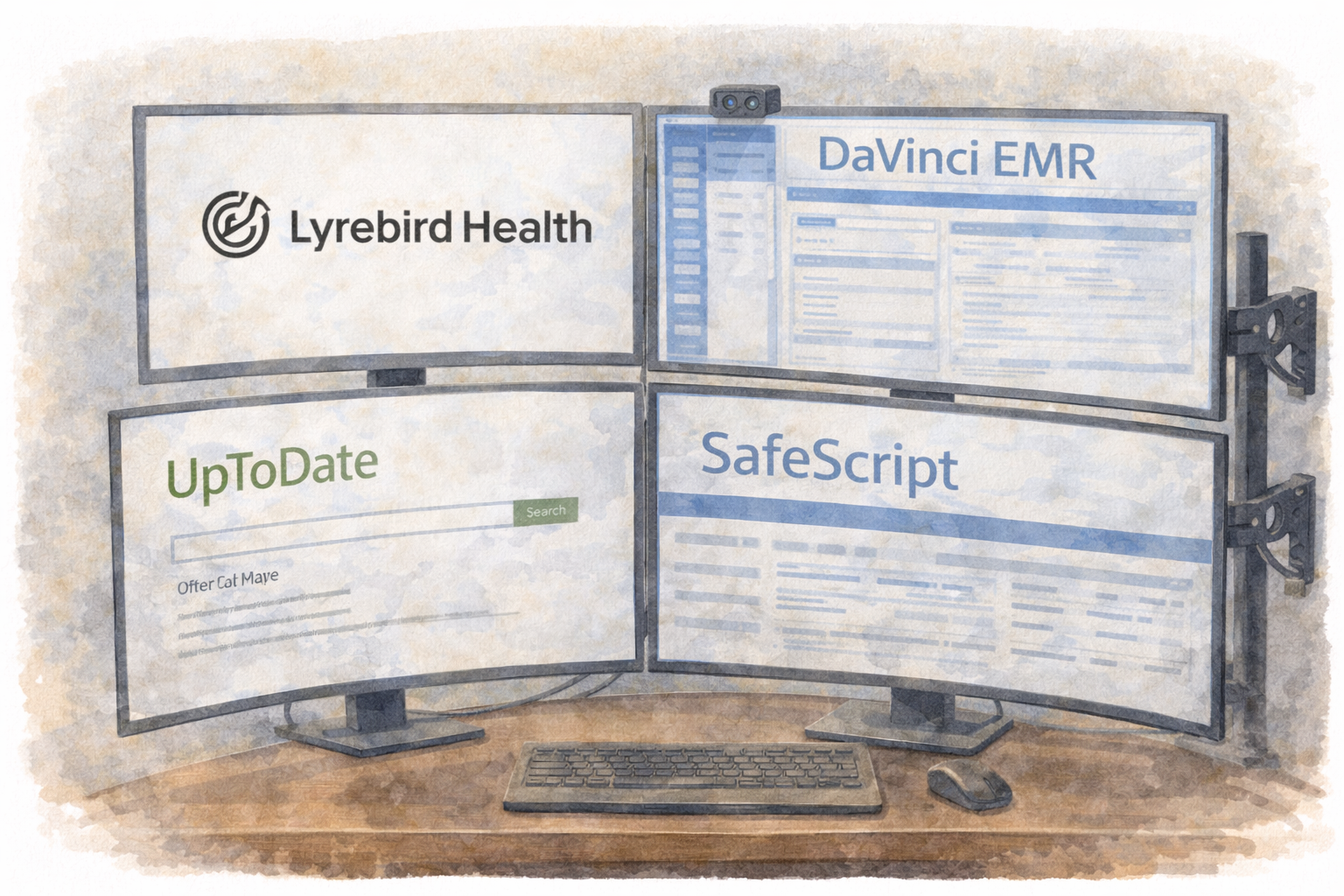
Late at night, small inefficiencies matter. Anything that reduces friction or distraction improves safety. I have to say, there is something nice about being able to look at the guidelines directly while the patient is speaking to me, rather than trying to maintain polite eye contact, and checking the guidelines out of the corner of my eye.
Documentation and the Role of Lyrebird AI Scribe
Documentation is a major part of after-hours care, particularly when continuity matters. I use my own private Lyrebird AI account as an ambient clinical scribe (although if I did not have my own account with Lyrebird AI, I would use the free one built into 13Sick’s software). With patient consent, it captures the consultation accurately and produces structured notes, patient letters written in plain language, and high-quality referrals.
This allows me to focus on listening rather than typing, which improves both communication and clinical judgement. The notes are clear, comprehensive, and easy for other clinicians to read. Summaries at the top of the record make it much easier for someone else — whether another 13Sick doctor or a patient’s regular GP — to quickly understand what happened and why decisions were made.
Later in the shift, when I’m reviewing documentation, the quality of those notes becomes even more apparent. It reduces the risk of omissions and supports continuity of care in a way that feels genuinely useful rather than bureaucratic. Reading the notes often reminds me of things I had since forgotten, or had not realised were relevant when they were said.
Supervision, Support, and Learning as a Registrar
As a GP Registrar, I’m very aware that I’m still learning and refining my practice. One of the strongest aspects of working at 13Sick is the level of real-time support available. I have access to fully qualified GPs for discussion, as well as a senior doctor who is always contactable.
Those conversations are reassuring from a safety perspective and invaluable educationally. It’s rare to find a role that offers this combination of autonomy and accessible senior support, particularly in after-hours medicine. Instead of feeling isolated, I feel connected — and that support directly translates into safer care for patients.
Why This Work Feels Sustainable
Taken together, the pace, structure, software, supervision, and documentation systems make working at 13Sick feel sustainable in a way that many after-hours roles don’t. I can practise careful medicine, direct most patients safely to remain at home, and escalate appropriately when required.
It feels like a natural evolution of the after-hours urgent care work I was already doing — but in a way that’s more efficient, more thoughtful, and better for both doctors and patients.
In Part 3, I’ll step back from the clinical side and explain how the billing model works, because it’s often misunderstood and actually says a lot about why 13Sick exists in the first place.